I've neglected you, poor blog! The spring has sprung and I have let you fall by the wayside.
The nice thing about a blog is that even if you lose readers from neglect, you can always pick the blog back up and dust it off.
This spring has been an intense one here at Tanglewood. I've put in so many berry bushes I can't even count them all and I've brought the berry patch up to a total of over 1/4 acre of blackberries, raspberries, currants, gooseberries and even some less common rubus like wineberry, loganberry and tayberry.
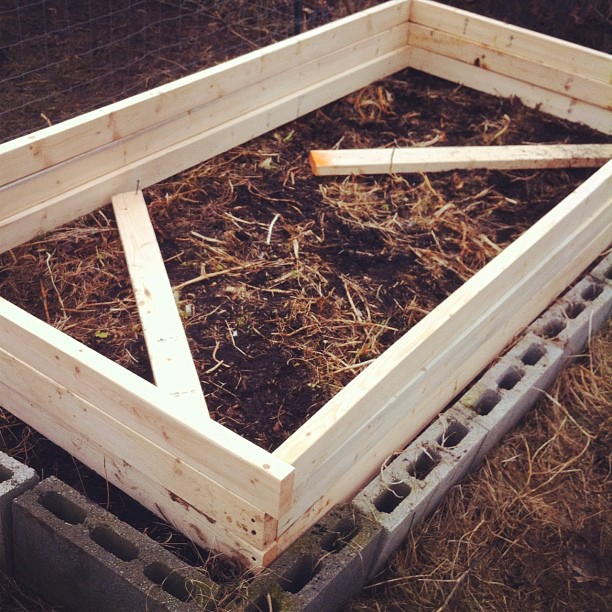
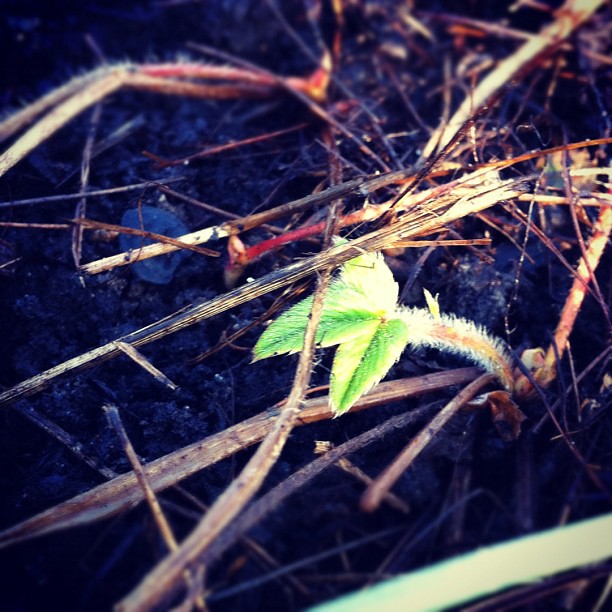
I've also been hard at work prepping strawberry beds for the impending arrival of new bareroot stock this week. I've even been in contact with another strawberry enthusiast who has hooked me up with Madam Moutot and Scarlet cultivars, both of which are incredibly old and hard to acquire.
I've decided my focus for this year is to take the heirloom gardening a little further. I plan to use a number of Victorian (and Victorian inspired) methods to grow pre-1900 era plants. In fact I'm only growing two non-heirloom plants this year, but they're modern French imports: the Mara des Bois strawberry and the Petit Pois pea, both of which are supposed to be modern kickbacks to a time when the goal of growing food was taste (and novelty) and not marketability or quantity.
Yesterday my husband and I spent a bit of time in the morning's flurries (yes, flurries... Thanks, Michigan!) gathering pea sticks to support my shelling peas. I'll be posting photos (and info, in case you are unfamiliar with pea sticks) of them soon, I promise.
I also started plotting lines in the garden using my new string winder, based on Victorian designs.
Have you been up to anything unique in the garden?
Have you all abandoned me as I have abandoned you? Lol!
Wednesday, April 11, 2012
Right. I have got to get back to this.
Labels:
berries,
heirloom,
historical farming,
spring,
Victorian
Friday, March 2, 2012
On Melon Houses and planting new fruit varieties
If you've read my blog much at all, I'm sure you've picked up on the fact that I have a huge sweet tooth. When you combine that with gardening you end up in all sorts of trouble.
I LOVE to grow fruit, and this year I have decided to pull out all of the stops. I'll be planting new varieties of strawberries, raspberries, blackberries, currants and gooseberries - new to me, that is. Nearly every variety that I'm adding to my garden this year is from before the 1950's. The few exceptions include a modern white currant cultivar that I bought to compare to several antique cultivars that I've ordered, and of course Mara Des Bois strawberries, which I am in love with despite their modern origins. I'll post more on the berry additions later.
For now, take a look at what I've been designing and planning over the past few weeks!

It may not look like much, especially in my chicken scratchy handwriting and sketching, but this is hopefully going to be my adaptation of the British Victorian melon house. The whole thing will be covered with plastic, like a green house, but suspended midway (angled around approximately 2' above the soil) will be a cattle panel (heavy duty welded wire grid). The idea is that I will plant a row of melons at the back of the house (the small end). The vines will grow up the back of the house and onto the cattle panel where they will continue to sprawl outwards across the gaps in the panel. When they finally fruit, the fruit will hang down and I will tie it with simple cotton netting to hold it in place.
This set up will allow for air flow to help prevent mildew, cover to provide early heat for the plants and to prevent cucumber beetles from wreaking havoc on the poor flowers, and control of pollination. My plan is to hand pollinate all of the melons myself (Ooh, I'd love to use an authentic rabbit-tail pollinator! How cool!)
The other thing this set up will allow me to do is grow strawberries beneath the melons. June bearing strawberries tend to reach their peak in (duh) June, which is long before the melons would reach across to the front of the trellis. While the melons are making their first meager inches up to the trellis, the strawberries will be fruitful, planted in a row along the front of the bed. I'll also be hand pollinating these strawberries, which means I'll be able to play around with breeding a bit if I really get the drive. In between the strawberries and the melon plants will be some cutting greens, spinach and tom thumb buttercrunch lettuce.
I LOVE to grow fruit, and this year I have decided to pull out all of the stops. I'll be planting new varieties of strawberries, raspberries, blackberries, currants and gooseberries - new to me, that is. Nearly every variety that I'm adding to my garden this year is from before the 1950's. The few exceptions include a modern white currant cultivar that I bought to compare to several antique cultivars that I've ordered, and of course Mara Des Bois strawberries, which I am in love with despite their modern origins. I'll post more on the berry additions later.
For now, take a look at what I've been designing and planning over the past few weeks!

It may not look like much, especially in my chicken scratchy handwriting and sketching, but this is hopefully going to be my adaptation of the British Victorian melon house. The whole thing will be covered with plastic, like a green house, but suspended midway (angled around approximately 2' above the soil) will be a cattle panel (heavy duty welded wire grid). The idea is that I will plant a row of melons at the back of the house (the small end). The vines will grow up the back of the house and onto the cattle panel where they will continue to sprawl outwards across the gaps in the panel. When they finally fruit, the fruit will hang down and I will tie it with simple cotton netting to hold it in place.
This set up will allow for air flow to help prevent mildew, cover to provide early heat for the plants and to prevent cucumber beetles from wreaking havoc on the poor flowers, and control of pollination. My plan is to hand pollinate all of the melons myself (Ooh, I'd love to use an authentic rabbit-tail pollinator! How cool!)
The other thing this set up will allow me to do is grow strawberries beneath the melons. June bearing strawberries tend to reach their peak in (duh) June, which is long before the melons would reach across to the front of the trellis. While the melons are making their first meager inches up to the trellis, the strawberries will be fruitful, planted in a row along the front of the bed. I'll also be hand pollinating these strawberries, which means I'll be able to play around with breeding a bit if I really get the drive. In between the strawberries and the melon plants will be some cutting greens, spinach and tom thumb buttercrunch lettuce.
Also, a slight miscalculation lead me to build these houses 6" shorter than the length of the raised beds. I intend to plant snap peas in a single row along the north side of each bed in this space to help fix a bit of nitrogen and to add some diversity. If cucumber beetles become a real nuisance, I'll tear out the peas and put some rattail radishes in instead.
No inch unplanted, that's my motto!
So in a fit of intense mania this morning, I began to build my melon houses. Heavy rains and storms were forecasted but I managed to get all three beds ready for the installation of the cattle panels. Once those are in place, I'll attach the final beams, some additional supports, and cover them in tensed 4mm plastic! I've never been a fan of using plastic in the garden, but glass is just not feasible at this point in my life :) I'm sure you understand...
So, this is what I've been madly researching, designing and executing lately.
Are you planning anything exciting in your gardens this March?
Labels:
building,
garden,
garden planning,
historical farming,
melons,
projects,
strawberries
Wednesday, February 22, 2012
In the kitchen: black currant and wild european blackberry sauce
(Sorry to double post this - it began as an accident but I figured I'd leave this up here in case you wanted to follow what I'm doing in my bakery kitchen this morning. Visit http://tanglewoodbakery.blogspot.com for more posts!)
Today I'm mixing up several cookie doughs and other sweets but what I am most excited about are the fillings for my tartlets.
This week's tartlets will be extra special as I'll be cooking down a rich and earthy fruit paste made from local black currants and locally foraged wild blackberries (European variety, naturalized).
I expect these to be super flavorful with hints of summer wines. I may yet put them over a chocolate or other base when they're in their final tartlet form. I'm hoping for now that they'll stand alone just fine, as I expect them to.
Today I'm mixing up several cookie doughs and other sweets but what I am most excited about are the fillings for my tartlets.
This week's tartlets will be extra special as I'll be cooking down a rich and earthy fruit paste made from local black currants and locally foraged wild blackberries (European variety, naturalized).
I expect these to be super flavorful with hints of summer wines. I may yet put them over a chocolate or other base when they're in their final tartlet form. I'm hoping for now that they'll stand alone just fine, as I expect them to.
Labels:
bakery,
berries,
rare berries,
summer
Sunday, February 19, 2012
Saturday, February 18, 2012
I have been so berry busy..
Well folks, it's been a while, and as a consequence I realize I've lost some readers which is a huge bummer... but, but, but! I've been so busy! I go through phases of extreme mania this time of year any time we get a break in the weather, and Michigan seems to be offering break after break after break. It's hard to sit still long enough to write a blog post, unless part of that sitting still involves the comatose collapse after overworking myself in the garden or at the horse farm. We got a dusting of snow the other day; really it was four inches or so, but the next day it was nearly 40ยบ outside so I call it a dusting since it only stuck around for a few hours...
Those few hours of snow were kind of a blessing though because they provided me with an excuse to crash between manic activities. The photo above is of the preparations for our 2012 berry garden. I forget if I've posted on this yet, but I'll be harvesting from seven rows of mature red raspberry bushes (30 ft rows), two rows of mature purple raspberry and two shorter (15 ft) rows of mature blackberry bushes this year. In addition to these beauties, I'll be planting at least 20 new blackberries, 24 gooseberries and 24 currants, in various varieties. This doesn't even begin to touch on the strawberries I have plans for!
While it was warm enough to melt the top few inches of snow this week I was able to get some belated weeding done. We have a serious problem with perennial turf grasses sneaking into raised beds. Ugh, what a drag. We are also plagued by catnip and creeping charlie, or ground ivy (which I find so satisfying to pull out by the arm load, so that's alright!) While weeding, I couldn't help but smile happily at the itty bitty wild strawberry (Fragaria virginiana) leaves I would find popping up here and there. They are incredibly hardy, but I still tucked them back into bed after I weeded, under some leaves and straw, just in case.
So if you haven't already picked on it, I feel I should point out that I've finally embraced my love for all things fruit and I've decided to replace many of the less desirable points of landscape around our place with fruiting plants. I will still vegetable garden, totally, but I will keep my veggies a little lower key this year, planting primarily things I can direct sow or let self seed. I want my veggies to be a little more... liberated. I'll be interplanting certain semi-shade-tolerant veggies with the berry patches and i'll still have a handful of raised beds designated for them, but I've given myself over to the siren that is fruit gardening, mostly perennial fruit. I've also made plans to convert my cutting green gardens to covered european melon beds, with strawberries interplanted beneath the slanted panels (they'll get crowded out of their sunlight, but not until after their June fruiting season when the melons really take off... at least that's my hope.)
(On a side note, I've recently applied to a government germplasm bank to receive tissue samples of some incredibly old Frageria x ananassa cultivars to use in some kinda geeky research that I'd like to do involving historical vs modern gardening techniques and the antique strawberry - one of these varieties is even documented as being bred at the turn of the 18th century! I will keep you posted on this - even if I don't receive the tissue samples, I have found a few resources for 19th century varieties that I can use.)
Another aspect of my yard that I've decided to dominate with fruit-bearing plants is the West-facing wall that runs behind the long garage. We don't actually have use of the garage; it's used to store golf course maintenance equipment, but I contacted our land lady (who has GOT to be the best land lady ever... and I don't even think she reads this blog so I'm not sucking up here) and she gave me permission to plant espaliered fruits along that wall! I've always wanted to train fruits to a wall, and this wall almost creates a Victorian courtyard feel to our yard, which I really enjoy and want to embrace.
Yesterday I spent hours clearing the wall. It was plagued by some of the largest multiflora rosa bushes I have ever seen (with canes literally three inches thick!) and the image above seriously shows about half of the length of the wall I cleared. The bushes were huge! You can kind of make out the break in the grass (by the loppers) that shows how far they extended into the yard. I also cleared out years of junk that had been tossed behind those bushes, before our time. There were pallets, logs, old industrial wire, plastic... all SORTS of stuff! I threw away the garbage and dragged the rest of it to the windbreak of pines we have at the West side of the yard where I used it to close a few holes in the existing brush where the ducks like to scramble through to the other side of the old fencing.
This is a photo that shows the finished wall. I left an adolescent crabapple tree down at the far end because it provides some awesome crabapples that I like to use for canning and we have a pair of orioles that occasionally nest in it in spring. Apart from that, with a bit more work on the existing stumps, this wall will be the new home to three fan-trained blackberry bushes (maybe five if I can clear out behind my raised beds), two fanned cherries, two espaliered pears and two fanned apricots. (I know apricots are impossible to grow, but I'm hoping that by keeping them against the west wall they will flower later and thus be sheltered from late frosts... hoping). I want to avoid growing many pears and apples because the several antique cousins looming over the property harbor a lot of disease that would make it inevitable that they would struggle. I may give in, though, especially if I find them cheap! I've got all sorts of walls I can train plants to on my house, too! LOL.
So yes, I haven't been blogging, but I've been doing so much more! Learning about espalier and prepping for spring has been keeping me very busy. What have you been up to, readers? Anything to prep for the impending spring?
Labels:
alpine strawberry,
berries,
garden planning,
planning,
spring,
strawberries,
winter
Thursday, February 2, 2012
Spring shouldn't be Springing...
We've been enjoying the strangest weather here at Tanglewood. This week has offered two days hovering in the mid-to-high 50's, and the rest of the week has been and will be in the 40's. My usual February activities are almost exclusively house-bound, apart from the occasional slogging of hot water to the barn if the hydrant has frozen again.
Last year on this very date we were recovering from a snow storm that dumped feet of snow on us; I had to climb fences to get to my horses, as the gates wouldn't open in the deep snow. This year is in stark contrast, as yesterday I spent almost my entire day in a sweatshirt and muck boots, dividing berry bushes and digging holes for the 87 berry plants I've just ordered (Yikes. That number looks bigger when I type it here...)
Today I intend to spend my time doing the same, taking a break in the mid-day to grab lunch with my brother and then slogging out to tap some Box Elder trees in the hopes that this year produces at least a little sap run despite the bizarre weather.
Last year on this very date we were recovering from a snow storm that dumped feet of snow on us; I had to climb fences to get to my horses, as the gates wouldn't open in the deep snow. This year is in stark contrast, as yesterday I spent almost my entire day in a sweatshirt and muck boots, dividing berry bushes and digging holes for the 87 berry plants I've just ordered (Yikes. That number looks bigger when I type it here...)
Today I intend to spend my time doing the same, taking a break in the mid-day to grab lunch with my brother and then slogging out to tap some Box Elder trees in the hopes that this year produces at least a little sap run despite the bizarre weather.
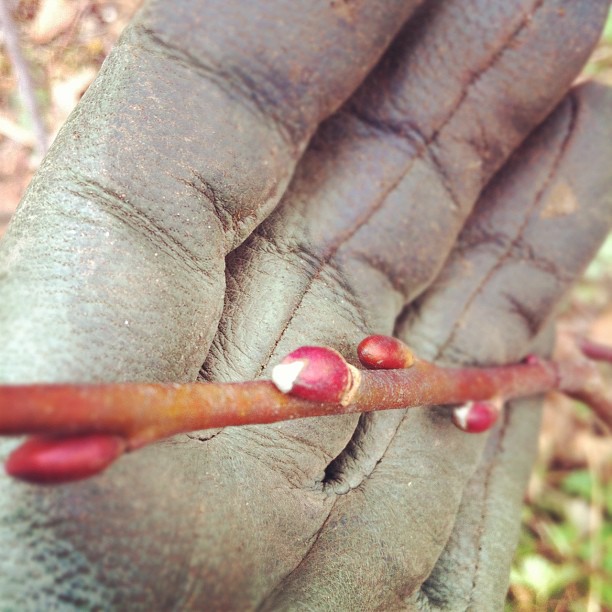
The crazy thing is, things are actually starting to break hibernation in this heat wave! The peach tree buds have the tiniest bit of swell to them that, if I hadn't inspected them closely last week, I would never have noticed. I have to wonder how this is going to affect our fruit production state-wide, this year. I can't imagine it's going to be good.
Crazier still, when I went outside yesterday morning and checked the pussy willows, they were tightly closed, the buds showing only minimal swelling. By noon, however, six of them had begun to swell so much that they were bursting open! This weather is strange, indeed.
Are you experiencing unseasonably warm temperatures where you live? How are the plants and animals taking it?
(Also, has anybody ever tapped Box Elder trees? I just learned that they produce a delicious sap for syrup and our place is literally plagued by them!)
Monday, January 30, 2012
On Tomatoes and Planning to do Nothing
You know.. I was thinking the other day. Every year, I have some volunteer tomato plants pop up here and there, and I rarely deter them from doing so. Every year I've been pleasantly surprised by the tasty results of said volunteers... and so this year...
I think I'm going to lay off the tomato planting.
At the end of 2011 I gave up on trying to keep up with the ripe tomatoes. I had planned poorly, staked wimpily and decided pretty much that the slugs could have the tomato plants. There were plenty of heirloom tomatoes out there, rotting on the ground. Thus, the tomato kingdom fell prey to various nasties (though I was incredibly surprised to only find two hornworms the entire season!)
This winter, I've been reading up on winter sowing as well as do-nothing farming, as conceived by Masanobu Fukuoka. I've posted about this before (though I can't find the post to link to it) and I'm thinking this year I'm going to put my faith in the seeds of last year's laziness. :) I was late planting my tomatoes last year and because of that and the terrible lack of fruit-setting heat, I got very few tomatoes before the slugs were strong enough to chase me out of the garden with their slimy sluginess. Ew. Because of all of this, I'm feeling a little pre-defeated... I don't want to deal with it again. Not like last year.
So. Theoretically if I let the tomatoes do their own thing this year I should get fruit similar to the open-pollinated and heirloom varieties I planted last year, right? On vines that sprout when they think it's best to sprout, grow straight from the ground and never know the restricting walls of a cellpack or a seeding tray... right?
If it doesn't work... well, I'll see that early enough that I can probably purchase some more mature plants and catch up more conventionally. I just can't help but feel my anxiety levels begin to creep up as soon as I open the seed catalogues to the entire chapter of tomato varieties that they offer. Hundreds of varieties, people. It's overwhelming. I don't want to plan tomato patches. I want to plan neat little rows of things like lettuce and beets... and long-term projects like the blackberry and gooseberry patches.
So that's my plan. I'll amend the soil a bit with some composted manure in the spring, and I'll till the pathways, weed and thin seedlings... but apart from that, Mr. Tomato, You are on your own for 2012.
xoxo
I think I'm going to lay off the tomato planting.
At the end of 2011 I gave up on trying to keep up with the ripe tomatoes. I had planned poorly, staked wimpily and decided pretty much that the slugs could have the tomato plants. There were plenty of heirloom tomatoes out there, rotting on the ground. Thus, the tomato kingdom fell prey to various nasties (though I was incredibly surprised to only find two hornworms the entire season!)
This winter, I've been reading up on winter sowing as well as do-nothing farming, as conceived by Masanobu Fukuoka. I've posted about this before (though I can't find the post to link to it) and I'm thinking this year I'm going to put my faith in the seeds of last year's laziness. :) I was late planting my tomatoes last year and because of that and the terrible lack of fruit-setting heat, I got very few tomatoes before the slugs were strong enough to chase me out of the garden with their slimy sluginess. Ew. Because of all of this, I'm feeling a little pre-defeated... I don't want to deal with it again. Not like last year.
So. Theoretically if I let the tomatoes do their own thing this year I should get fruit similar to the open-pollinated and heirloom varieties I planted last year, right? On vines that sprout when they think it's best to sprout, grow straight from the ground and never know the restricting walls of a cellpack or a seeding tray... right?
If it doesn't work... well, I'll see that early enough that I can probably purchase some more mature plants and catch up more conventionally. I just can't help but feel my anxiety levels begin to creep up as soon as I open the seed catalogues to the entire chapter of tomato varieties that they offer. Hundreds of varieties, people. It's overwhelming. I don't want to plan tomato patches. I want to plan neat little rows of things like lettuce and beets... and long-term projects like the blackberry and gooseberry patches.
So that's my plan. I'll amend the soil a bit with some composted manure in the spring, and I'll till the pathways, weed and thin seedlings... but apart from that, Mr. Tomato, You are on your own for 2012.
xoxo
Labels:
garden planning,
gardening,
projects
Sunday, January 22, 2012
Hero's First Arena Turn Out
Today was the day I'd both been looking forward to and dreading; This was the day I had planned to let Hero loose in the indoor riding arena to really see her progress.
It's a scary thing to do because since her ligament injury she has had very little change to walk around, let alone run. Horses with a lot of energy can do stupid things, injuring themselves with a wrong turn or twist, and if she re-injures that ligament she's toast... I'd hate to retire her at seven years old!
So here is the video of her strutting her stuff in the indoor. She only bolted a few times up and down the long side of the arena, and each time she did some fancy turns and stops that made my stomach do flips, but she didn't re-injure herself and she managed to wear herself out after a few short minutes.
What a good day!
O Hai Winter! There You Are!
Brighid found winter, and so did I! That snow storm was such a nice polite reminder that we're actually in the winter months. I had just been talking to Jeremy about how I wasn't feeling ready to start planning garden stuff and how I was feeling overwhelmed and underenthusiastic.
Then, overnight, we got 5 inches of snow and my attitude changed completely. The snow has covered up everything that had me stressed. I can't see the piles of rubbish waiting to be hauled to the compost pile. I can't see the garden hose in the north garden that I forgot to drain and coil.
All I can see are the gardens in my mind's eye and those gardens look fantastic!
Are you planning your gardens yet? If so, what are you planning?
Labels:
garden planning,
snow,
winter
Thursday, January 19, 2012
Hero's Day Out
Yesterday was a good day, despite some difficult twists and turns. The biggest highlight of my day, and probably my week, was that I got to sit on the back of my horse, Hero, who is recovering from a bad ligament strain (possibly even a tear; we're not sure.)
This Sunday will mark the tenth consecutive week that Hero has spent in a box stall. She originally had an abscessed hoof, and unfortunately the ligament injury was compensatory for that. Poor Hero. The first week or two was really rough. She wouldn't stand on her abscessed hoof and she couldn't stand on her injured leg, so she literally spent more than a week standing on two legs, only setting the tips of her toes down to balance occasionally. She already has leg issues, as she as malnourished as a foal, and her front legs are two different lengths, her right foot being somewhat clubby. The vet, and my own trainer whom I really look up to, told me that she'd be a good school horse but she'd probably never excel at anything. Before her injury, however, she was working on second level movements in dressage including half pass and she was really starting to collect, and she had jumped 3'9" with beautiful form and ease... psh... That's excelling in my book!
I kept a pressure wrap on her leg for more than eight weeks straight, changing it several times a week and dealing with poor Hero's irritated antics (kicking, biting, shoving, head waggling..) because the poor thing is so bored in that stall. She is used to being turned out 24/7, and she took her playing in the field very seriously before this. For the first month, I kept her in her stall in the middle of the barn and she was outright MEAN to anybody or any horse that came by. She would lunge through the opening by the grain bin and try to bite, she would spin and kick if you came into the stall... it was scary. She has been one of the most sweet, albeit expressive horses I've ever known, and this is where she started to make her opinion very clear.
After a month or so I moved her to the very last stall in the barn so that she could see her friends in the field and so they could stick their heads over the gate to visit when they come up for water. There was an instant change in Hero. She became friendly again and stopped some of the neurotic behaviour she'd had before I moved her.
So, flash forward to this week: Hero's pressure wrap has been off for more than a week now and she has been working in hand at both the walk and trot soundly. At one point the other day I went to introduce her to a new friend that she'd be recovering with in the small paddock eventually. When she saw him, she pulled free from me and bolted around the muddy paddock for five minutes, galloping, twisting, spinning and kicking up... all the while this was happening I kept having flashes of her leg, ballooned up, and myself signing her over to a retirement home. Blech. I finally caught her, thanks to a fantastic student who ran out with a bucket of grain, and shoved her in a stall for a few hours while I taught, trying not to think about what she'd just done to her leg.
When I came back to her after teaching, her leg was fine, and she was asking for more! So I gave her a few more days of relaxed hand walking and trotting and then I came to yesterday when I decided I would finally sit on her again.
She has been antsy and slightly unpredictable, since she's such a bored horse, but as my butt sat on her back she immediately put on her game face and went to work. It was amazing! She obviously remembers that working in the arena is her job and it doesn't matter if she's been cooped up for months, if she's doing her job, she does it right. What a fantastic work ethic! I rode her for almost ten minutes, just walking her in large figures while asking her to soften and stretch down so her back muscles would get a good work out. It was fantastic.
I'm hoping this is the start to her coming back into real work. For now I'll be hand walking her 3-4 times a week and riding her bareback another 2-3 times a week. Hopefully after she builds some muscle she'll be ready to go back to work! Before her injury, Hero was a fantastic dressage horse and a very promising jumper. When she was jumping 3'-3'9" with me it was with very little effort, but she really never had the forward drive of a competitive jumper. I always assumed it would come with time, but maybe this is a sign that she shouldn't jump. My plan for now is to keep babying her until the end of February, when I'll make the decision to keep her on as a school horse or to sell her to someone who will use her more lightly to prevent further injury, something I don't particularly want to think about.
Still, that's a decision for down the road. Yesterday was a huge triumph for both of us, and I'm so happy to see that she's ready and willing to go back to work. Horses are really amazing creatures...
This Sunday will mark the tenth consecutive week that Hero has spent in a box stall. She originally had an abscessed hoof, and unfortunately the ligament injury was compensatory for that. Poor Hero. The first week or two was really rough. She wouldn't stand on her abscessed hoof and she couldn't stand on her injured leg, so she literally spent more than a week standing on two legs, only setting the tips of her toes down to balance occasionally. She already has leg issues, as she as malnourished as a foal, and her front legs are two different lengths, her right foot being somewhat clubby. The vet, and my own trainer whom I really look up to, told me that she'd be a good school horse but she'd probably never excel at anything. Before her injury, however, she was working on second level movements in dressage including half pass and she was really starting to collect, and she had jumped 3'9" with beautiful form and ease... psh... That's excelling in my book!
I kept a pressure wrap on her leg for more than eight weeks straight, changing it several times a week and dealing with poor Hero's irritated antics (kicking, biting, shoving, head waggling..) because the poor thing is so bored in that stall. She is used to being turned out 24/7, and she took her playing in the field very seriously before this. For the first month, I kept her in her stall in the middle of the barn and she was outright MEAN to anybody or any horse that came by. She would lunge through the opening by the grain bin and try to bite, she would spin and kick if you came into the stall... it was scary. She has been one of the most sweet, albeit expressive horses I've ever known, and this is where she started to make her opinion very clear.
After a month or so I moved her to the very last stall in the barn so that she could see her friends in the field and so they could stick their heads over the gate to visit when they come up for water. There was an instant change in Hero. She became friendly again and stopped some of the neurotic behaviour she'd had before I moved her.
So, flash forward to this week: Hero's pressure wrap has been off for more than a week now and she has been working in hand at both the walk and trot soundly. At one point the other day I went to introduce her to a new friend that she'd be recovering with in the small paddock eventually. When she saw him, she pulled free from me and bolted around the muddy paddock for five minutes, galloping, twisting, spinning and kicking up... all the while this was happening I kept having flashes of her leg, ballooned up, and myself signing her over to a retirement home. Blech. I finally caught her, thanks to a fantastic student who ran out with a bucket of grain, and shoved her in a stall for a few hours while I taught, trying not to think about what she'd just done to her leg.
When I came back to her after teaching, her leg was fine, and she was asking for more! So I gave her a few more days of relaxed hand walking and trotting and then I came to yesterday when I decided I would finally sit on her again.
She has been antsy and slightly unpredictable, since she's such a bored horse, but as my butt sat on her back she immediately put on her game face and went to work. It was amazing! She obviously remembers that working in the arena is her job and it doesn't matter if she's been cooped up for months, if she's doing her job, she does it right. What a fantastic work ethic! I rode her for almost ten minutes, just walking her in large figures while asking her to soften and stretch down so her back muscles would get a good work out. It was fantastic.
I'm hoping this is the start to her coming back into real work. For now I'll be hand walking her 3-4 times a week and riding her bareback another 2-3 times a week. Hopefully after she builds some muscle she'll be ready to go back to work! Before her injury, Hero was a fantastic dressage horse and a very promising jumper. When she was jumping 3'-3'9" with me it was with very little effort, but she really never had the forward drive of a competitive jumper. I always assumed it would come with time, but maybe this is a sign that she shouldn't jump. My plan for now is to keep babying her until the end of February, when I'll make the decision to keep her on as a school horse or to sell her to someone who will use her more lightly to prevent further injury, something I don't particularly want to think about.
Still, that's a decision for down the road. Yesterday was a huge triumph for both of us, and I'm so happy to see that she's ready and willing to go back to work. Horses are really amazing creatures...
Subscribe to:
Posts (Atom)